Five years after Hurricane Wilma hit, insurers getting new claims, lawsuits [South Florida]


Five years after Hurricane Wilma hit, insurers getting new claims, lawsuits

Five years after Hurricane Wilma crossed Florida, insurers still are being whipped as they deal with new and reopened claims that have come along years after the storm.

By now, it seems Wilma might have been forgotten. The storm made landfall near Marco Island on Oct. 24, 2005, as a Category 3 hurricane, then headed for the east coast.

Costs have mounted for insurers, who will be paying Wilma bills for years.

Argentines risking it all to carry huge wads of cash


Argentines risking it all to carry huge wads of cash

The “marker” lurks inside the bank, looking for people pulling large amounts of cash from a safe deposit box or a bank account. The gunmen linger outside, usually on motorcycles, waiting to make their move.

For people such as Carolina Piparo, eight months pregnant and carrying a purse full of cash for a down payment on her first home, gangs like these are an unavoidable risk in today’s Argentina, where the underground cash economy is fueling a frightening new crime wave.

The July 29 attack that left Piparo comatose and killed her child added to a toll of thousands of crime victims — 4,998 reported "withdrawal robberies" in the first half of this year alone, according to Louis Vicat, a security consultant who keeps track privately because the government hasn’t published detailed crime statistics since 2007.

Brilliant hotel plan goes south [South Florida]


Brilliant hotel plan goes south

BOB BRILLIANT’S PLAN WAS NOT to just retire to Florida, but to take his considerable life savings and invest in a promising business that also would provide him with a job.

At first, the plan seemed like a good one: A hotel with nightly rentals of apartment-like rooms near Siesta Key, where most rooms must be let by the week.

His $3 million, plus a $7 million bank loan to fund the purchase of two Stickney Point hotels and their renovation, appeared to be working for the 43-room Hibiscus Suites when the average rate Brilliant charged was $137 a night.

Paperwork Trail: The Lawyers Who Fight Foreclosures – WSJ.com

Paperwork Trail: The Lawyers Who Fight Foreclosures

The paperwork mess muddying home foreclosures erupted last month. But the legal strategy behind it traces to a lawyer’s gambit in 2006 that has helped keep one couple in their home six years beyond their last mortgage payment.

Lillian and Robert Jackson stopped paying on their home in Jacksonville, Fla., in 2004 when business dropped off at their cleaning company. Eviction might have seemed inevitable when they faced a foreclosure hearing two years later.

But their lawyer, James Kowalski, had the idea of taking a deposition from the signer of the mortgage papers. When a document processor for GMAC Mortgage admitted she routinely signed such papers without being familiar with details of the loans, she was tagged as one of a species now known as robo-signers.

Mortgage Damage Spreads


Mortgage Damage Spreads

The unfolding foreclosure-processing debacle is causing bank stocks to slide and putting millions of delinquent borrowers in limbo.

But how disruptive the crisis ultimately becomes—for homeowners, the housing market and the broader economy—depends on how quickly a number of technical problems and legal challenges are resolved in the months ahead.

In essence, fast-paced modern finance is colliding with the much slower machinery of the U.S. legal system. While finance aims for efficiency and maximized profits, the courts demand due process. And that’s becoming a growing issue as lenders come under attack for taking short cuts to oust homeowners who haven’t mailed in a mortgage check for months.

Banks stocks were hammered on Friday for the second straight day as investors continued gauging the sector’s exposure to higher operating and legal costs.

From a Maine House, a National Foreclosure Freeze


From a Maine House, a National Foreclosure Freeze

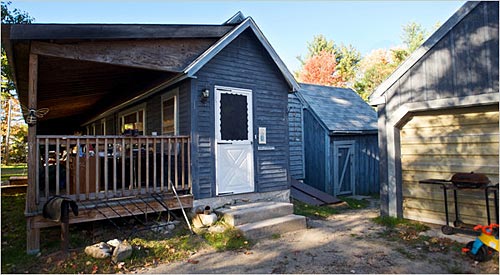
The house that set off the national furor over faulty foreclosures is blue-gray and weathered. The porch is piled with furniture and knickknacks awaiting the next yard sale. In the driveway is a busted pickup truck. No one who lives there is going anywhere anytime soon.

Nicolle Bradbury bought this house seven years ago for $75,000, a major step up from the trailer she had been living in with her family. But she lost her job and the $474 monthly mortgage payment became difficult, then impossible.

It should have been a routine foreclosure, with Mrs. Bradbury joining the anonymous millions quietly dispossessed since the recession began. But she was savvy enough to contact a nonprofit group, Pine Tree Legal Assistance, where for once in her 38 years, she caught a break.