As Condos Rise in Florida, Investors Try to Flee

As Condos Rise in Florida, Investors Try to Flee

As dozens of condominium towers conceived during Florida’s real estate boom near completion, investors who snatched up units in the preconstruction phase in hopes of turning a quick profit are increasingly trying to break contracts, even walking away from fat deposits.

“Motivated” sellers are flooding online forums like Craigslist with advertisements for condo units still months or years from being finished. And lawyers have been inundated with calls from people hoping to avoid closing on units they bought during the speculative craze of 2004 and 2005.

“I get two or three of these calls a day,” said James Ryan, a lawyer in Boca Raton who said he had 40 clients looking to get out of condo contracts. One, Mr. Ryan said, abandoned a $340,000 deposit rather than close on a $1.6 million unit that lost its appeal as the market faltered.

The numbers suggest that it will only get worse. In Miami-Dade County alone, 8,000 new condo units will be completed this year and nearly 12,000 more in 2008.
No profit doesn’t mean no taxes

No profit doesn’t mean no taxes

DEAR BOB: I bought a rental property in 1991, which I sold for $450,000. To avoid capital gain tax, I used an Internal Revenue Code 1031 tax-deferred exchange to buy another rental property for $450,000. After renting it for 12 months, I moved in and have lived in it for 24 months. If I sell this property at the same $450,000 price, will I owe any capital gain tax since I made no profit? Is this a good way to avoid capital gain tax? –Sim Y.

DEAR SIM: Nice try! But Uncle Sam is way ahead of you.

Your adjusted-cost basis for the $450,000 rental house you acquired in the Internal Revenue Code 1031 tax-deferred exchange was not $450,000.

Instead, it was your $450,000 purchase price minus the deferred capital gain on your old rental property minus the depreciation you deducted on the acquired property during the 12-month rental period before you moved in to make it your principal residence.

Retirement interrupted

Retirement interrupted

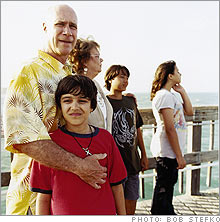
One couple mapped out their retirement, but the plan hinged on being able to flip Florida real estate. Oops. Time for Plan B.

Walking along a pier in Daytona Beach with their youngest grandson on a recent Saturday afternoon, Steve and Carol Daimler stopped to see what fish the locals were catching. The fishermen wowed 10-year-old David with a big flounder they’d just landed and photos of a 500-pound, nine-foot shark they’d once caught.

After a day spent playing miniature golf, eating homemade ice cream and splashing around in his grandparents’ in-ground pool, David declared, “This is the best day of my life.”

Such perfect afternoons are exactly what Steve, 61, and Carol, 60, had in mind when they retired to Florida from Virginia two years ago. But those days are rare. Instead, the Daimlers spend most of their time consumed with selling two investment properties they bought shortly after the move – holding open houses, distributing fliers, cold-calling realtors and catering to prospective buyers.

Investors in realty exchanges seek relief

Investors in realty exchanges seek relief

Appeal to avoid paying taxes on money that vanished.

Hundreds of investors – some who lost millions after the collapse of a firm specializing in tax-deferred real estate deals – are seeking relief from the Internal Revenue Service to avoid paying taxes on money that has disappeared.

Many are Bay Area residents who entrusted their money to 1031 Advance in San Jose, a subsidiary of the Richmond, Va.-based 1031 Tax Group that filed for bankruptcy in New York City this month.

Attorneys hired by several investors and a trade organization said Monday they have asked the IRS to lift the rigid 180-day rule that governs the buying and selling of property in transactions known as 1031 exchanges.

Old Florida enclave is new Florida hot spot [South Florida]

Old Florida enclave is new Florida hot spot [South Florida]

Before it became a people magnet, Flagler County’s biggest claim to fame was Exit 284 — where I-95 runs closer to the Atlantic Ocean than at any other exit from Maine to Miami.

That’s all changed. Flagler has a new national title, courtesy of the Census Bureau: America’s fastest-growing county. During this decade, the once rural and sleepy Old Florida enclave, tucked between St. Augustine and Daytona Beach, has doubled its population to nearly 90,000.

Driving a chunk of Flagler’s growth: a couple thousand South Floridians. Some say they left to escape congested roads, confining cookie-cutter developments and skyrocketing home prices.

‘We call them the `Hiccup People,’ ” said Carl Laundrie, a spokesman for Flagler County. “Lots of them originally came from the North, went down to South Florida and now they’ve hiccuped and landed back up here.”

The Hiccup People, along with thousands from across the country, have frustrated longtime Flagler residents, who see signs their community is becoming a lot like South Florida.

High roller of home loans [Central Florida]

High roller of home loans [Central Florida]

Daniel Sadek played Orange County’s subprime lending boom like a card shark dealt the ace and jack of spades.

Just five years ago he was selling cars. Then, in January 2002, he anted up $250 for a state lender license and started selling home loans through his company, Quick Loan Funding.

Over the next five years, Quick Loan wrote $3.8 billion in mortgages, lending money fast – and often on onerous terms – to people with shaky credit

His staff, once 700 strong, has shriveled to about 125. Monthly loan volume plunged to $30 million from a record $218 million in December 2005.